How much does shed removal cost?
Most homeowners pay $500–$1,500 for professional shed removal. Small sheds can cost as little as $200, while large sheds with concrete slabs can exceed $3,500. Costs vary by shed size, material, foundation type, and your state's labor rates.
What Is a Shed Removal Cost Calculator?
A shed removal cost calculator estimates what it costs to tear down and haul away an old shed from your yard. It factors in the shed size, material type, structural condition, and your state's labor and disposal rates to generate a realistic cost range — whether you're dealing with a small wooden storage shed that's rotting in the corner or a larger metal structure with a concrete slab underneath.
This calculator also helps you estimate the cost to remove a shed, shed demolition and removal pricing, junk removal service costs for old sheds, and DIY vs professional shed teardown comparison — all using state-specific labor and disposal data.
Getting an accurate shed removal cost estimate before calling removal companies prevents overpaying. Based on our contractor pricing surveys, the spread between the cheapest and most expensive bid on a shed removal project is often 40–60%, so knowing the fair price range for your area gives you real negotiating leverage.
How Much Does Shed Removal Cost?
The average shed removal cost ranges from $300 to $3,500 depending on shed size, material, condition, and whether the job includes foundation removal. Most homeowners pay between $500 and $1,500 for a standard wood shed teardown with debris hauling included.
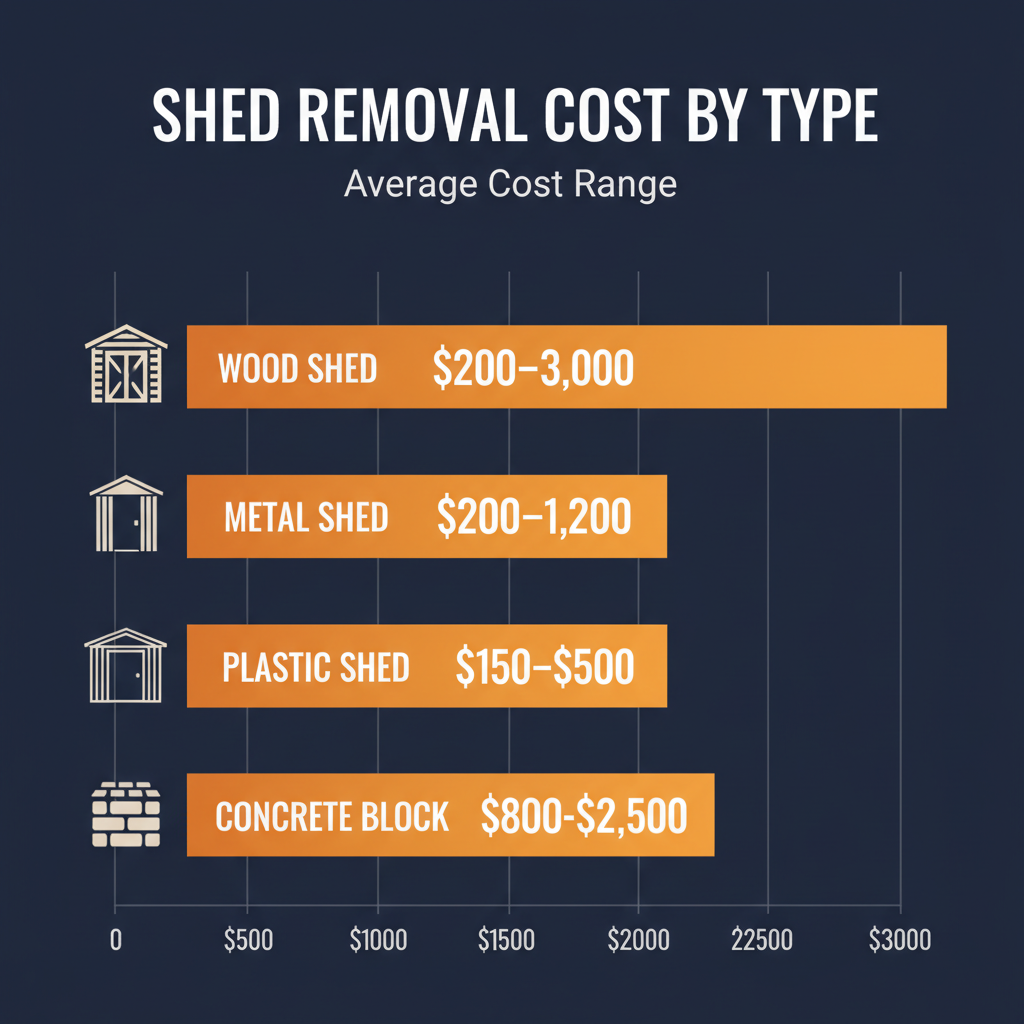
| Shed Type | Size | Average Cost | Includes |
|---|---|---|---|
| Small Wood Shed | Under 100 sq ft | $200–$800 | Demo + haul away |
| Medium Wood Shed | 100–200 sq ft | $600–$1,500 | Demo + haul away |
| Large Wood Shed | 200–400 sq ft | $1,200–$3,000 | Demo + haul away |
| Metal Shed (any size) | 60–300 sq ft | $200–$1,200 | Disassembly + haul (scrap value offset) |
| Plastic/Resin Shed | 40–200 sq ft | $150–$500 | Disassembly + haul |
| Concrete Block Shed | 80–250 sq ft | $800–$2,500 | Demo + haul (heavier debris) |
These prices include the demolition labor and debris removal. They do not include electrical disconnect, concrete slab removal, or yard restoration — those are common add-ons covered in the cost factors section below.
Shed Removal Cost by Size
Shed size is the primary cost driver in any removal project. The bigger the shed, the more labor hours, the more debris volume, and the more truck loads or dumpster space required to haul away the waste.
| Shed Size | Cost Range | Cost Per Sq Ft | Typical Debris Volume |
|---|---|---|---|
| Small (under 80 sq ft) | $200–$600 | $3–$8 | 3–5 cubic yards |
| 8×10 (80 sq ft) | $300–$800 | $4–$10 | 5–8 cubic yards |
| 10×12 (120 sq ft) | $500–$1,200 | $4–$10 | 8–12 cubic yards |
| 12×12 (144 sq ft) | $600–$1,500 | $4–$10 | 10–15 cubic yards |
| 12×16 (192 sq ft) | $800–$2,000 | $4–$10 | 12–18 cubic yards |
| 12×20 (240 sq ft) | $1,000–$2,500 | $4–$10 | 15–22 cubic yards |
| 12×24+ (288+ sq ft) | $1,500–$3,500 | $5–$12 | 20–30 cubic yards |
The cost per square foot stays relatively consistent at $4–$10 for most wood sheds. Larger sheds don't cost proportionally more per square foot because the setup, travel, and equipment costs are spread across a bigger job. Concrete block sheds run higher per square foot due to the weight and disposal cost of the material.
Factors That Affect Shed Removal Cost
Shed Size and Material
A small wooden shed under 100 square feet is a half-day job for a two-person junk removal crew with a truck. A 300-square-foot well-constructed shed with a shingled roof, siding, and framing takes a full day with heavier equipment. Metal sheds come apart faster (they're typically screwed together, not nailed) and the scrap metal has resale value that can offset part of the removal cost. Concrete block sheds are the most expensive to remove per square foot because the debris is heavy and cannot be recycled easily.
Structural Condition
A damaged shed or one that's partially collapsed is cheaper to demolish but can be more hazardous to work around. Rotting wood, a leaning frame, or a compromised roof mean the crew needs to work more carefully. What's less obvious is that an old shed in decent structural condition actually costs more to tear down because the material is still solid and requires more effort to dismantle.
Foundation Type
This is where shed removal costs jump significantly. A shed sitting on gravel, pavers, or skids is easy — once the structure is gone, you're done. But a shed with a concrete slab adds $500–$2,000 for the slab removal, depending on thickness and whether rebar is embedded. Many homeowners choose to leave the slab in place and repurpose it as a patio pad or base for a new storage shed rather than paying for removal.
Accessibility and Site Conditions
Where the shed is located on your property matters. A shed right next to the driveway is easy for a truck and crew to access. A shed in the far corner of the yard, behind a fence, surrounded by landscaping, or on a slope adds time and labor. If the removal crew can't get a truck close to the shed, they're hand-carrying debris across the yard — which adds to the cost. Poor accessibility can add $200–$500 to the project.
Electrical Service
If the shed has electricity — lights, outlets, or a dedicated circuit from the main panel — it needs to be professionally disconnected before demolition begins. An electrician typically charges $100–$300 for a shed electrical disconnect. Never attempt to demolish a shed with live electrical wiring. This is not a place to save money with a DIY approach.
Plumbing
Some larger sheds, workshops, and she-sheds have running water or even a sink. Plumbing disconnection and capping adds $150–$400 depending on complexity. The water supply line needs to be properly capped at the house connection, not just at the shed.
Contents and Hazardous Materials
Most removal companies include basic contents removal in their bid, but sheds full of old paint cans, chemicals, motor oil, or other hazardous waste require separate disposal. If the shed is full of old junk, expect the cost to remove everything to increase. Some junk removal companies charge by volume (what fills their truck), so a shed stuffed with contents costs more than an empty one. Ask whether the estimate includes shed contents or just the structure itself.
Dump Fees and Disposal
Landfill tipping fees vary significantly by region — from $30 per ton in rural areas to $100+ per ton near major cities. A typical small shed generates 1–2 tons of debris. Green waste (clean wood) may be disposed of more cheaply than construction waste with shingles, treated lumber, or mixed materials. Some removal companies charge a flat rate that includes disposal. Others add dump fees on top of the labor quote — always ask.
DIY vs. Professional Shed Removal
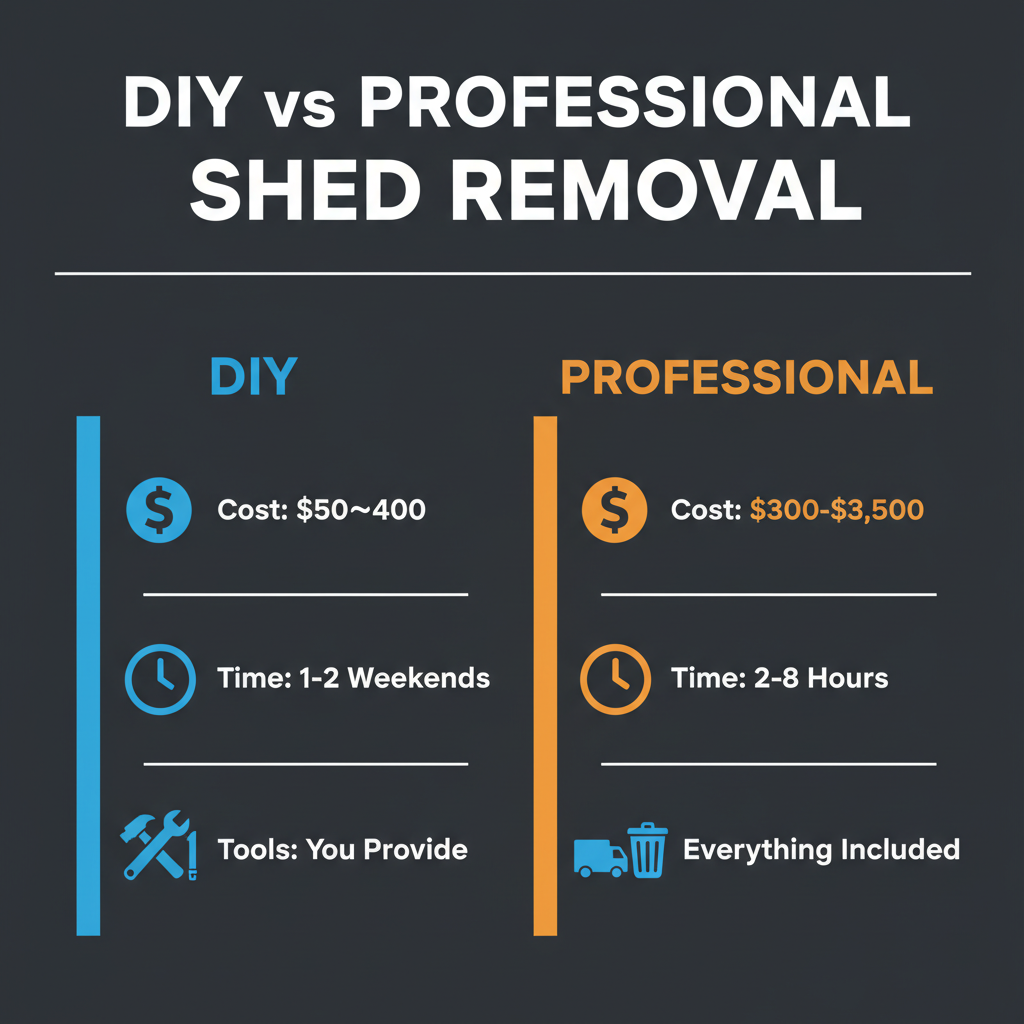
| Factor | DIY | Professional |
|---|---|---|
| Cost | $50–$400 (disposal only) | $300–$3,500 (full service) |
| Time | 1–2 full weekends | 2–8 hours |
| Tools needed | Pry bar, reciprocating saw, hammer, gloves, safety glasses | All provided |
| Disposal | You rent dumpster ($250–$400) or make dump runs ($50–$100/load) | Included in price |
| Best for | Small wood/metal sheds, no electrical, no slab | Large sheds, concrete slabs, electrical, tight access |
When DIY makes sense: A small wooden shed or metal shed under 120 square feet with no concrete slab, no electrical service, and decent yard access is a straightforward weekend project. You'll need basic demolition tools (most homeowners already have them) and either a pickup truck for dump runs or a rented dumpster. The shed itself comes apart quickly — start with the roof, then walls, then the floor. Budget $50–$100 per dump run or $250–$400 for a dumpster rental that sits in your driveway for a few days.
When to hire a pro: Any shed with a concrete slab, electrical service, plumbing, structural instability, or materials that might contain asbestos. Also consider hiring a professional junk removal crew if the shed is large (over 200 square feet), if accessibility is poor, or if you simply don't have the time or tools. A professional crew can tear down a medium shed in a few hours and haul away all the debris in a single trip — what would take you an entire weekend is done before lunch.
Cost of Common Shed Removal Add-Ons
| Add-On | Cost | Notes |
|---|---|---|
| Concrete slab removal | $500–$2,000 | Depends on thickness, rebar, and size |
| Electrical disconnect | $100–$300 | Requires licensed electrician |
| Plumbing disconnect | $150–$400 | Cap at house connection |
| Fence section removal/repair | $100–$300 | If fence is attached to or adjacent to the shed |
| Yard grading and restoration | $200–$500 | Level the area, add topsoil, seed grass |
| Shed contents removal | $100–$500 | Depends on volume — some companies include this |
| Hazardous material disposal | $200–$1,000 | Old paint, chemicals, treated lumber |
| Permit fee | $50–$200 | Only required for sheds over 120–200 sq ft in most areas |
The most common surprise cost is the concrete slab. Many homeowners focus on the shed removal cost and forget that the slab underneath needs to go too — unless they plan to reuse it. Always ask your contractor whether the bid includes slab removal or just the structure. That single question can prevent a $500–$2,000 surprise.
The Shed Demolition and Removal Process
Step 1: Empty the shed. Remove all contents, tools, and stored items. This is usually the homeowner's responsibility, though some junk removal companies will handle it for an additional fee. Separate anything hazardous (old paint, pesticides, propane tanks) — these require special disposal and cannot go in a regular dumpster or landfill.
Step 2: Disconnect utilities. If the shed has electricity, schedule an electrician to disconnect and cap the wiring. Same for plumbing. This must happen before demolition begins — never demolish a shed with live electrical connections.
Step 3: Remove the roof. The demolition process starts at the top. The crew strips the roofing material (shingles, metal panels), then removes the roof sheathing and rafters. Starting from the top down is safer because it removes weight and reduces collapse risk.
Step 4: Take down the walls. Walls come off next — siding first, then framing. A wooden shed's walls typically come apart quickly with a reciprocating saw and pry bar. Metal shed walls unscrew in panels. The framing is cut into manageable sections for loading onto the truck or into the dumpster.
Step 5: Remove the floor and foundation. The floor deck and joists are removed. If the shed sits on skids or blocks, those come out easily. A concrete slab requires a jackhammer or excavator-mounted breaker — this is a separate and more expensive step.
Step 6: Haul debris and clean up. All demolition debris is loaded and hauled to the landfill, recycling center, or scrap yard. The site is swept and raked clean. If yard restoration is included, the area is graded and prepped for grass or whatever comes next.
Tips to Reduce Shed Removal Costs
Get at least three quotes. Shed removal pricing varies wildly between companies. A local junk removal service, a general demolition contractor, and a handyman will each price the job differently. The spread is often 40–60% between the highest and lowest bid.
Empty the shed yourself. Removing the contents before the crew arrives saves time and keeps the bid lower. Most removal companies charge more if they have to clean out a shed full of stuff before they can start tearing it down.
Check for scrap value. Metal sheds have scrap value — some removal companies will discount the job because they can sell the metal. If you have a large metal shed or steel storage building, mention the scrap value when getting quotes. In some markets, scrap buyers will even haul away a metal shed for free if the metal is worth enough.
Do partial DIY. Take down the easy parts yourself (roof shingles, siding, anything you can reach safely from the ground) and hire a pro for the structural demo and debris hauling. This reduces the labor hours and can save 20–30% on the total cost.
Skip the slab removal. If the concrete slab is in decent shape, leave it in place. Repurpose it as a patio, a base for a new shed, or a spot for a fire pit or outdoor furniture. Slab removal is typically 25–40% of the total shed removal cost — skipping it is the single biggest savings available.
Time it right. In many markets, late fall and winter are slower seasons for junk removal and demolition companies. You can often get 10–15% lower pricing in the off-season compared to spring and summer when everyone is doing yard projects.
List it for free removal. If the shed is in usable condition, list it on Craigslist or Facebook Marketplace for free to anyone who will disassemble and remove it. Many people want a free shed and will do all the work themselves. Even an old shed in rough shape may attract someone looking for free lumber or metal roofing.
Are There Hidden Costs to Shed Removal?
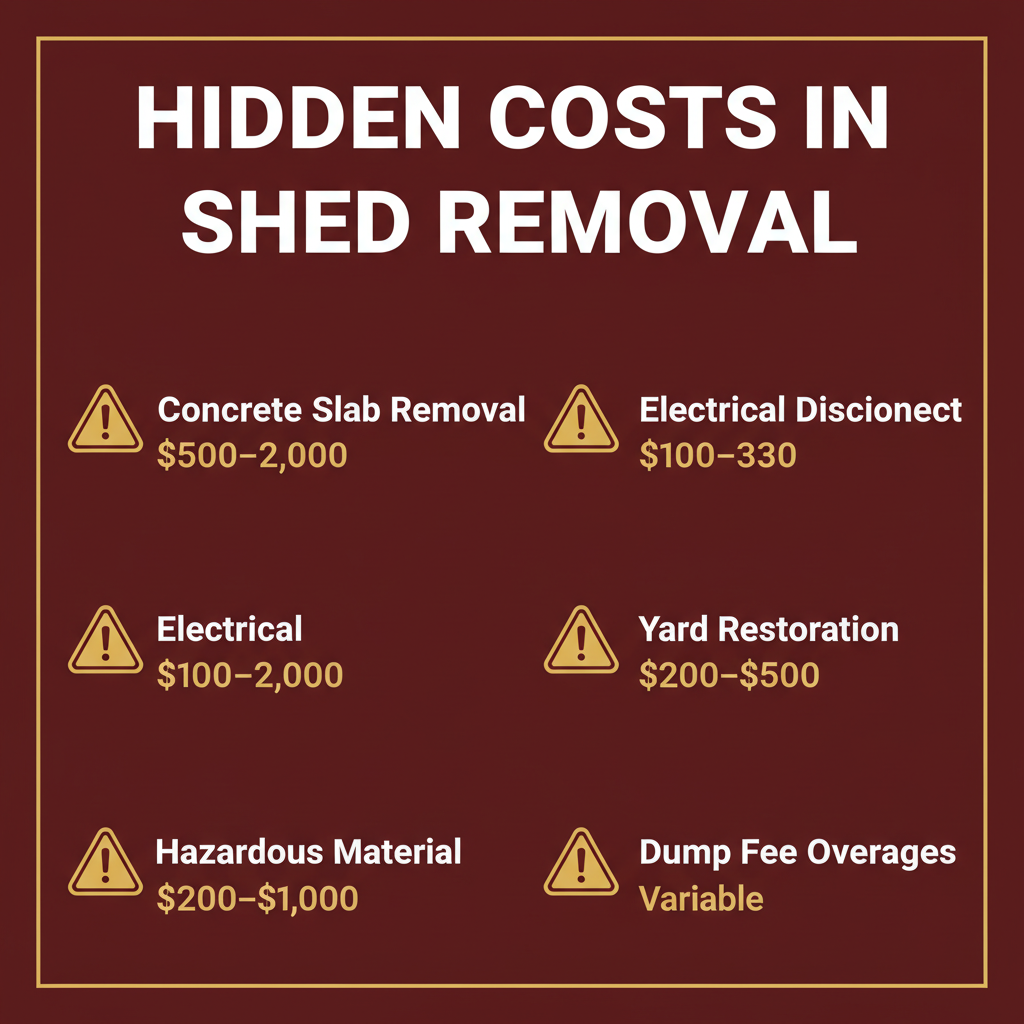
The shed removal bid you receive may not include everything. Here are the common surprise costs that catch homeowners off guard:
Concrete foundation removal. The most common hidden cost. Many bids only include the structure above ground. If there's a concrete slab underneath, that's often a separate line item — and it can cost as much as the shed removal itself.
Electrical disconnect. If the shed has power, someone needs to disconnect it before demo begins. This requires a licensed electrician and is rarely included in a junk removal company's bid.
Dump fee overages. Some companies quote a flat rate that includes disposal. Others give you a labor rate and pass dump fees through at cost. If the shed is larger or heavier than estimated, those dump fees can exceed the original quote. Get clarity upfront on whether disposal is included or billed separately.
Yard damage. Heavy equipment and debris hauling can tear up your yard, especially in wet conditions. Some contractors include basic site restoration. Others don't — and you're left with ruts and bare spots. Ask whether yard restoration is included in the bid.
Permit costs. In most areas, sheds under 120–200 square feet don't require a demolition permit. But larger sheds might. The permit fee ($50–$200) and any associated inspection fees are the homeowner's responsibility, not the contractor's.
FAQ
How much does it cost to dismantle and remove a shed?
Shed removal costs range from $300 to $3,500 depending on size, material, and whether you hire a professional or do it yourself. A small wood shed under 100 square feet typically costs $200–$800 for professional removal. A large shed over 200 square feet runs $1,500–$3,500. Metal sheds cost less to remove than wood or concrete block structures because they disassemble quickly and the scrap metal has resale value.
Can I demolish my own shed?
Yes — small wood and metal sheds are common DIY demolition projects. You'll need basic tools (pry bar, reciprocating saw, hammer, work gloves), a way to haul away debris (truck or dumpster rental), and a free weekend. DIY shed demolition typically costs $50–$300 for disposal only. However, sheds with electrical wiring, concrete slabs, or asbestos siding should be handled by professionals.
Do I need a permit to take down a shed?
In most jurisdictions, sheds under 120–200 square feet do not require a demolition permit. Larger sheds, especially those with electrical service or plumbing, typically do require a permit ($50–$200). Check with your local building department — the threshold varies by municipality. Failing to get a required permit can result in fines and complications with future property sales.
How long does shed removal take?
A professional junk removal crew can demolish and remove a small to medium shed in 2–4 hours. Large or complex sheds may take a full day. DIY shed demolition typically takes a full weekend including debris hauling. Concrete slab removal adds another half day to the project timeline.
How difficult is it to dismantle a shed?
Small wood sheds are relatively easy to take apart with basic tools — most handy homeowners can handle it. Metal sheds are even simpler since they're typically screwed together rather than nailed. The difficulty increases significantly with concrete block sheds, sheds on concrete slabs, sheds with electrical wiring, and any structure that might contain asbestos-containing materials.
What can I do with my old shed?
You have several options: professional demolition and removal, DIY teardown and disposal, donating the shed if it's in usable condition, selling salvageable materials (lumber, metal roofing), listing it for free removal on Craigslist or Facebook Marketplace, or hiring a local junk removal service for a flat rate hauling job. If the shed is still structurally sound, consider selling or moving it rather than demolishing it.
Are there hidden costs to shed removal?
The most common surprise costs include: electrical disconnect fees ($100–$300), concrete slab or foundation removal ($500–$2,000), hazardous material disposal for old paint or chemicals stored inside, dump fees that exceed the contractor's initial estimate, and yard restoration or grading after the shed is gone ($200–$500). Always ask for an itemized bid that lists exactly what's included.
Related Calculators
Planning additional property cleanup or demolition? These calculators help estimate costs for related projects:
- Barn Demolition Cost Calculator — Larger agricultural structure teardown with salvage value analysis
- Garage Demolition Cost Calculator — Attached and detached garage removal estimates
- Concrete Demolition Cost Calculator — Foundation and slab removal pricing
- Deck Demolition Cost Calculator — Deck and patio teardown estimates
- Demolition Permits Guide — Permit requirements and costs by state
Data Sources & Methodology
This calculator estimates shed removal costs based on: shed size (square footage), material type (wood, metal, plastic, concrete block), structural condition, foundation type, utility connections, site accessibility, and state-specific labor and disposal rates across all 50 US states.
Cost ranges are compiled from contractor bid data, junk removal company pricing surveys, Bureau of Labor Statistics wage data, and regional landfill tipping fee databases. Shed size and material cost relationships are validated against published pricing from national removal companies and local contractor surveys. Figures are updated quarterly.