How much does kitchen demolition cost?
Most homeowners pay $1,200–$3,000 for a standard kitchen gut. Cabinets-only removal runs $500–$1,500. A full gut to studs with wall removal can exceed $5,000. Costs vary by kitchen size, scope, and state labor rates.
What Is a Kitchen Demolition Cost Calculator?
A kitchen demolition cost calculator estimates what it costs to tear out your existing kitchen before a remodel begins. It factors in the demo scope (cabinets only vs. full gut to studs), kitchen size, fixture count, and your state's labor rates to generate a realistic cost range.
This calculator also helps you estimate the cost to demo a kitchen, cabinet and countertop removal pricing, kitchen gut cost by square foot, and DIY vs professional kitchen demolition comparison — all using state-specific labor and disposal data.
Kitchen demo is where most remodels start — and where the first budget surprise often hits. Based on our contractor pricing surveys, the average cost difference between the cheapest and most expensive kitchen demo bid is 35–50%. Knowing the fair price for your scope and area means you're not overpaying before a single new cabinet gets installed.
How Much Does Kitchen Demolition Cost?
The average cost to demo a kitchen ranges from $500 to $5,000 depending on the demolition scope and kitchen size. Most homeowners demoing a standard kitchen as part of a remodel pay between $1,200 and $3,000.
| Demo Scope | Average Cost | What's Included |
|---|---|---|
| Cabinets & countertops only | $500–$1,500 | Remove upper and base cabinets, countertops, disposal |
| Partial gut (cabinets, counters, flooring) | $1,200–$3,000 | Above + floor removal, backsplash tile, appliance disconnect |
| Full gut to studs | $2,000–$5,000 | Strip everything — drywall, flooring, fixtures, down to framing |
| Full gut + wall removal (open concept) | $3,000–$8,000 | Full gut + load-bearing or non-bearing wall removal, structural support |
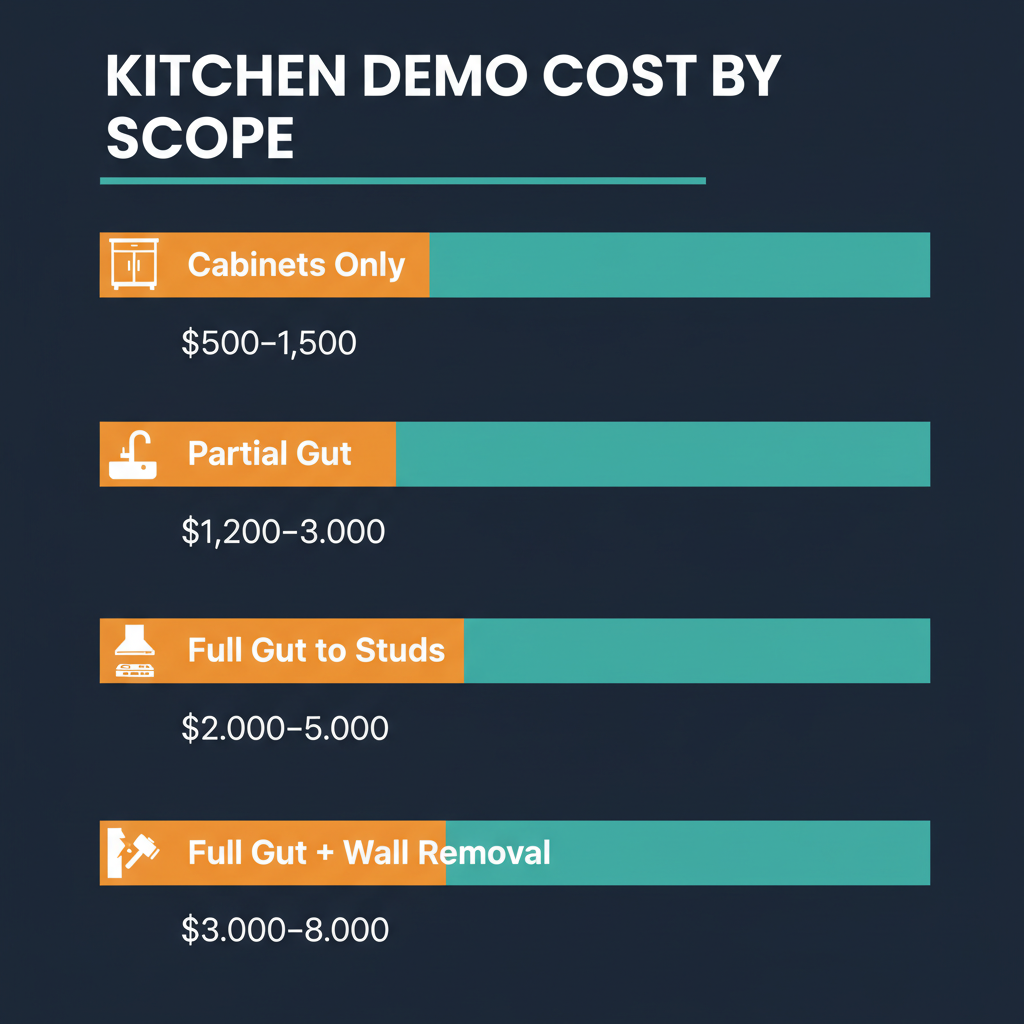
These prices include labor, basic debris removal, and disposal fees. They do not include asbestos testing or abatement, permit fees, structural engineering for wall removal, or dumpster rental if not bundled into the contractor's bid.
Kitchen Demo Cost Per Square Foot
Kitchen demolition cost per square foot ranges from $2 to $8 for most projects, with the national average sitting around $4–$6 per square foot for a full gut. The per-square-foot cost drops as the kitchen gets larger because setup and mobilization costs are spread across more area.
| Kitchen Size | Square Footage | Demo Cost Range | Per Sq Ft |
|---|---|---|---|
| Small kitchen | Under 100 sq ft | $500–$2,000 | $5–$8 |
| Standard kitchen | 100–200 sq ft | $1,000–$3,500 | $4–$7 |
| Large kitchen | 200–350 sq ft | $1,500–$5,000 | $4–$6 |
| Extra large kitchen | 350+ sq ft | $2,500–$7,000 | $4–$6 |
An average-sized kitchen in the US is about 150–200 square feet. At $4–$6 per square foot for a full gut, that puts the typical demolition project at $600–$1,200 for labor alone, with dumpster rental and disposal adding another $300–$500.
Kitchen Demo Cost Factors
Demolition Scope
This is the primary cost driver. Removing cabinets and countertops is a half-day job for a two-person crew. A full gut to studs — stripping drywall, tearing out flooring, removing all fixtures, pulling tile — takes 1–2 full days. Adding wall removal for an open concept layout brings in structural engineering, permits, and potentially HVAC rerouting, which can double or triple the demo cost.
Kitchen Size and Layout
A small galley kitchen under 100 square feet has fewer cabinets, less floor area, and less drywall than a 300-square-foot kitchen with an island, pantry, and breakfast nook. The square footage directly drives labor hours, debris volume, and disposal costs. L-shaped and U-shaped kitchens with more cabinet runs take longer to demo than simple single-wall layouts.
Number of Cabinets
Cabinet removal is priced by the unit or by linear foot. A typical kitchen has 20–30 cabinets (uppers and lowers combined). Removing kitchen cabinets takes 2–4 hours for a professional crew. If the cabinets are in reusable condition, careful removal for donation to Habitat for Humanity or resale takes longer but saves disposal costs — and may qualify for a tax deduction.
Countertop Material
Laminate countertops are lightweight and come off in minutes. Granite, quartz, and stone countertops are heavy (15–20 lbs per square foot) and require careful removal to avoid damaging the floor or cabinets below. If the countertops are in good condition, they can be salvaged and resold — granite slabs in particular hold decent resale value. Tile countertops need to be chiseled off, which is messy and slow.
Flooring Type
The floor under your kitchen adds significant variability to the demo cost. Vinyl or laminate flooring comes up relatively fast with a floor scraper. Ceramic or porcelain tile requires a hammer and chisel or rotary hammer — this is the most labor-intensive part of a kitchen gut. Hardwood floors under the kitchen that you want to preserve need protective covering during demolition, which adds time and care. Old tile removal on a mortar bed can cost $3–$8 per square foot on its own.
Appliance Disconnection and Removal
Most kitchens have 4–6 appliances that need disconnection before demo: refrigerator, stove/range, dishwasher, microwave, garbage disposal, and range hood. Electric appliances are simple to unplug. Gas ranges require professional disconnection by a licensed plumber or gas technician — never attempt to disconnect a gas line yourself. Appliance removal is sometimes included in the demo bid and sometimes separate. Ask.
Asbestos and Hazardous Materials
In homes built before 1980, the kitchen floor tile, sheet vinyl adhesive, drywall joint compound, and textured ceiling may contain asbestos. Testing costs $25–$50 per sample and takes 2–3 days for lab results. If asbestos is confirmed, licensed abatement must be completed before demolition begins — this adds $1,500–$5,000 to the project depending on the material and coverage area. Older homes may also have lead paint on walls and trim.
Load-Bearing Wall Removal
Opening up a kitchen to create an open concept layout is one of the most popular renovation projects — and one of the most expensive demo add-ons. If the wall between the kitchen and dining or living room is load-bearing, you'll need a structural engineer ($300–$500) to design a header beam system, a demolition permit, and a contractor experienced with structural modification. Total wall removal cost runs $1,500–$5,000 depending on wall length and structural complexity.
Dumpster and Disposal
A standard kitchen demolition generates 3–5 cubic yards of debris. A 10-yard dumpster ($250–$400 for a week rental) handles most kitchen demo projects. If you're doing a full gut plus wall removal, step up to a 15 or 20-yard dumpster. Some demolition contractors include dumpster rental in their bid. Others charge it separately — renting a dumpster yourself is often cheaper than paying the contractor's markup. Disposal fees at the landfill add $50–$150 depending on weight and your region.
Cost to Demo Kitchen by Fixtures and Fittings
If you're doing selective demolition — removing specific elements rather than a full gut — here's what each component costs individually:
| Item | Removal Cost | Notes |
|---|---|---|
| Upper cabinets (set) | $200–$500 | 1–2 hours, straightforward |
| Base cabinets (set) | $300–$600 | Heavier, plumbing disconnect may be needed |
| Kitchen island | $200–$500 | Plumbing and electrical if island has sink or outlets |
| Countertops (laminate) | $100–$300 | Light, fast removal |
| Countertops (granite/stone) | $200–$600 | Heavy, careful removal if salvaging |
| Backsplash tile | $150–$400 | Depends on area and adhesion method |
| Floor tile (per 100 sq ft) | $200–$500 | Mortar bed adds $150–$300 |
| Vinyl/laminate flooring (per 100 sq ft) | $100–$250 | Adhesive residue adds time |
| Sink and plumbing fixtures | $100–$250 | Requires water shutoff, proper capping |
| Drywall (per wall) | $150–$400 | Including insulation removal if present |
| Appliance removal (each) | $50–$150 | Gas appliances need licensed disconnect |
These costs are for professional removal. If you're demoing the kitchen yourself as a DIY project, your costs drop to disposal only — typically $300–$500 for a dumpster rental.
DIY Kitchen Demolition vs. Hiring a Pro
| Factor | DIY Kitchen Demo | Professional |
|---|---|---|
| Cost | $200–$500 (dumpster + disposal) | $1,200–$5,000 (full service) |
| Time | 1–2 full weekends | 1–2 days |
| Savings | $1,000–$3,000 in labor | Time savings of 2–3 days |
| Tools needed | Pry bar, reciprocating saw, drill, sledgehammer | All provided |
| Best for | Cabinets, countertops, flooring, backsplash | Full gut, wall removal, asbestos, gas lines |
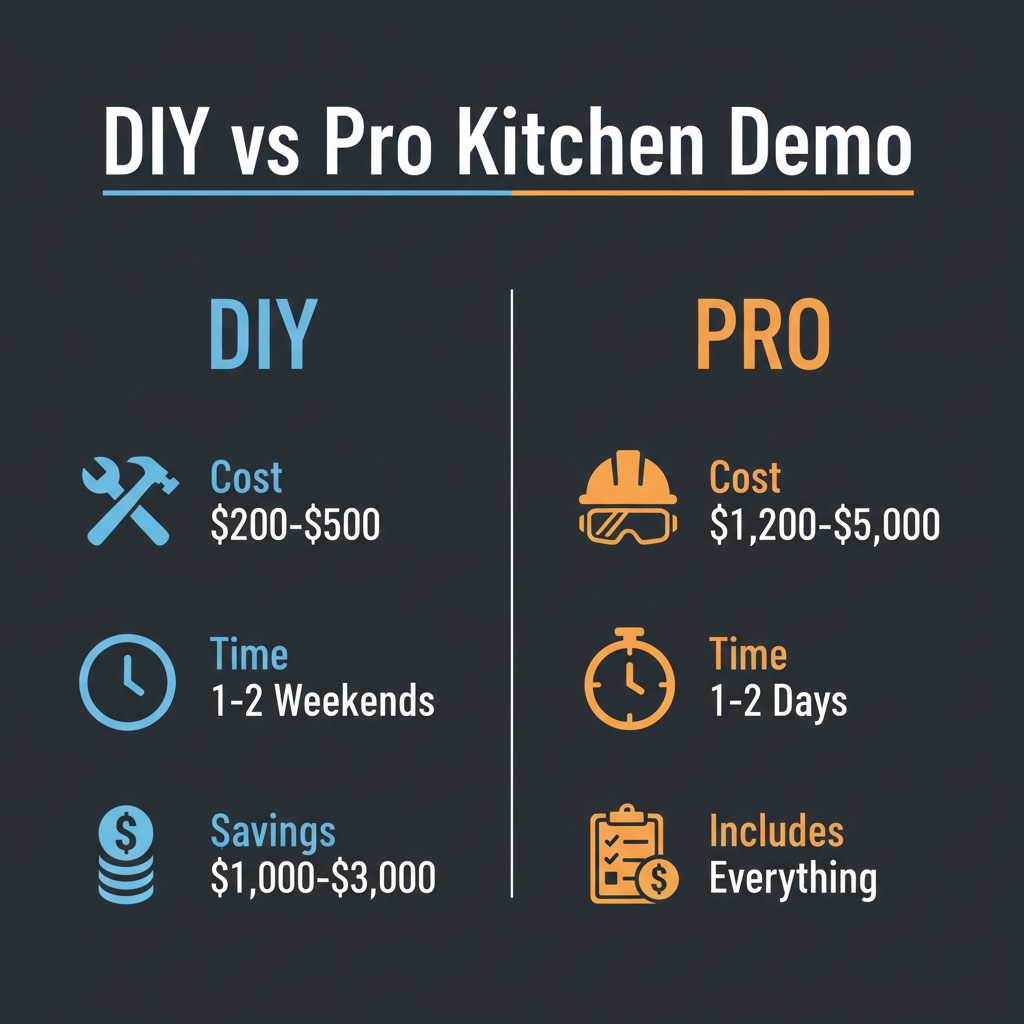
When to DIY: Removing kitchen cabinets, countertops, backsplash tile, flooring, and fixtures is within reach for most homeowners. You need basic tools (pry bar, reciprocating saw, drill, utility knife), a rented dumpster, and a full weekend. The kitchen demo itself is satisfying work — it's the cleanup and hauling that takes the most time. Budget the entire weekend and don't plan to cook at home until the remodel is underway.
When to hire a demolition contractor: Wall removal (especially load-bearing walls), gas line disconnection, electrical panel modifications, asbestos abatement, and projects where the demolition is part of a larger remodel with tight timelines. A professional demo crew can gut a kitchen in a single day and have the space ready for your remodel contractor the next morning — what takes you a weekend is done before dinner.
Step-by-Step Kitchen Demolition Guide
Step 1: Disconnect and remove appliances. Unplug the refrigerator, dishwasher, and microwave. Have a licensed professional disconnect gas ranges and gas-powered cooktops. Turn off the water supply to the kitchen sink and dishwasher. Remove all appliances from the space. Donate working appliances or arrange disposal.
Step 2: Remove cabinet doors and hardware. Take off all cabinet doors, drawers, and hardware. This makes the cabinets lighter and easier to remove from the wall. If you're donating the cabinets, bag and label the hardware so the next owner has everything they need.
Step 3: Remove upper cabinets. Upper cabinets are screwed to wall studs through a mounting rail. With the doors off, unscrew the cabinet boxes from the wall and from each other. Work with a partner — even empty upper cabinets are awkward to hold while unscrewing. Stack them near the dumpster.
Step 4: Remove countertops. Disconnect the sink plumbing (shut off water first) and remove the sink. Laminate and butcher block countertops are usually screwed from below through corner brackets — unscrew and lift off. Granite and stone countertops may need to be broken in place or carefully lifted by two people. They're heavy — don't underestimate the weight.
Step 5: Remove base cabinets. With countertops gone, base cabinets are screwed to the wall and sometimes to each other. Unscrew and pull them out. Check behind and beneath for plumbing connections, electrical outlets, and any signs of water damage or mold that should be addressed before the remodel.
Step 6: Remove backsplash and wall tile. Use a pry bar and hammer, working from the top down. Score the edge with a utility knife first to prevent tearing adjacent drywall. Some backsplash comes off cleanly. Others take chunks of drywall with them — if you're gutting to studs anyway, this doesn't matter. If you're keeping the drywall, work carefully.
Step 7: Remove flooring. Carpet or vinyl comes up by hand. Ceramic tile needs a rotary hammer with a chisel bit or a rented floor scraper for large areas. Laminate flooring snaps apart at the joints. If there's hardwood underneath that you want to keep, stop here and protect it. Check for asbestos before disturbing any floor tile in pre-1980 homes.
Step 8: Strip drywall (if full gut). If you're demoing to studs, remove the drywall by scoring with a utility knife and pulling in sheets. Wear a respirator — drywall dust is pervasive. This is the messiest step. Have the dumpster positioned as close to the kitchen as possible.
Step 9: Clean up and inspect. Sweep and vacuum the stripped space. Inspect the exposed framing, subfloor, and plumbing for water damage, mold, pest issues, or outdated wiring. This is the cheapest time to fix hidden problems — before new cabinets, flooring, and drywall cover them back up.
Tips to Save Money on Kitchen Demolition
Do the demo yourself. Kitchen demolition is the most accessible DIY renovation task. If you have a free weekend and basic tools, you can save $1,000–$3,000 in labor costs. The demolition work itself isn't complicated — it's physically demanding but not technically difficult.
Donate usable cabinets. If your kitchen cabinets are in decent condition, donate them to Habitat for Humanity ReStore or a similar building materials salvage organization. They'll often pick up for free, and you may qualify for a tax deduction. This reduces your disposal costs and helps someone else's renovation project.
Salvage countertops. Granite, marble, and quartz countertops hold decent resale value. List them on Facebook Marketplace or Craigslist before demo day. Stone countertops in good condition can sell for $200–$1,000 depending on size and material. The buyer usually handles pickup.
Rent your own dumpster. Demolition contractors typically mark up dumpster rental by 30–50%. Renting a 10-yard dumpster directly costs $250–$400 for a week. Tell the contractor you're providing the dumpster and get a labor-only bid — the total is usually cheaper.
Remove appliances and fixtures first. The less the demo crew has to handle, the lower the bid. Remove the refrigerator, dishwasher, and any portable appliances before the crew arrives. Take off cabinet doors and drawers. Disconnect the sink if you're comfortable with basic plumbing. Every hour you save the crew translates to $50–$100 off the bill.
Skip the slab if applicable. If your kitchen has a tile floor on a concrete subfloor, consider whether the subfloor actually needs to come out. Some remodelers can install new flooring directly over the existing subfloor after tile removal — saving the cost of subfloor demolition and replacement.
What's Included in Professional Kitchen Demolition
When you hire a demolition contractor or junk removal company to demo your kitchen, the typical scope includes:
Cabinet removal (uppers and lowers), countertop removal, backsplash tearout, flooring removal, basic fixture removal (sink, faucet), appliance disconnection (electric only — gas requires a licensed professional), drywall removal (if full gut), debris loading and hauling, site cleanup and sweeping. Some demolition services also include dumpster rental in their flat rate bid.
What's typically not included: gas appliance disconnection, asbestos testing and abatement, load-bearing wall engineering and removal, electrical modifications, plumbing relocation, demolition permits, and yard or driveway restoration if heavy equipment was used.
Always get an itemized bid that clearly states what's included. The number one source of cost surprises on kitchen demolition projects is discovering that something you assumed was covered isn't in the contractor's scope.
FAQ
How much does it cost to demo a kitchen?
Kitchen demolition costs range from $500 to $5,000 depending on scope, kitchen size, and your location. Cabinet and countertop removal only runs $500–$1,500. A partial gut (cabinets, counters, flooring) costs $1,200–$3,000. A full gut to studs runs $2,000–$5,000. Adding wall removal for an open concept layout can push the total to $3,000–$8,000.
Can I demo my own kitchen?
Yes — kitchen demolition is one of the most common DIY renovation projects. Removing kitchen cabinets, countertops, backsplash tile, and flooring are all within reach for a handy homeowner with basic tools. Budget a full weekend and $300–$500 for a dumpster rental. Do not attempt to remove load-bearing walls, disconnect gas lines, or handle asbestos yourself.
How long does kitchen demolition take?
A professional demolition crew can gut a standard kitchen in 1–2 days. DIY kitchen demo takes a full weekend for most homeowners. A full gut including wall removal extends to 2–3 days professionally. Add 3–7 days if asbestos testing and abatement is needed before demo can begin.
Should I test for asbestos before kitchen demolition?
If your home was built before 1980, testing is strongly recommended. Asbestos was commonly used in vinyl floor tile (especially 9×9 inch tiles), sheet flooring adhesive, drywall joint compound, and popcorn ceiling texture. Testing costs $25–$50 per sample through a mail-in lab. Disturbing asbestos without proper abatement creates a serious health hazard.
Is it cheaper to demo or remodel a kitchen?
Demolition is the first phase of a remodel, not a substitute for it. Kitchen demo costs $500–$5,000 while a full kitchen remodel runs $15,000–$75,000+ depending on the scope and finish level. The demolition cost is typically 5–10% of the total remodel budget. Demoing a kitchen without a remodel plan leaves you with a non-functional space.
How can I save money on kitchen demolition?
Based on our contractor pricing surveys, the biggest savings come from doing the demo yourself (saves $1,000–$3,000 in labor), donating usable cabinets to Habitat for Humanity ReStore, renting a dumpster directly instead of through the contractor, and removing appliances and fixtures before the crew arrives.
What is the 30% rule in remodeling?
The 30% rule suggests your kitchen remodel budget should not exceed 30% of your home's value. For a $300,000 home, that caps the remodel at $90,000. The demolition portion is typically 5–10% of the total project cost, so kitchen demo on that project would be $4,500–$9,000. This rule helps prevent over-improving relative to neighborhood values.
Related Calculators
Planning a full kitchen renovation? These calculators help estimate costs for related demolition work:
- Bathroom Demolition Cost Calculator — Similar scope, similar DIY potential
- Tile Removal Cost Calculator — Floor and wall tile tearout pricing
- Drywall Removal Cost Calculator — Gut to studs cost estimates
- Wall Demolition Cost Calculator — Load-bearing and non-bearing wall removal
- Interior Demolition Cost Calculator — Multi-room and whole-house gut estimates
- Demolition Permits Guide — Permit requirements for wall removal
Data Sources & Methodology
This calculator estimates kitchen demolition costs based on: demolition scope (cabinets-only to full gut), kitchen size (square footage), fixture count, flooring type, wall removal requirements, and state-specific labor and disposal rates across all 50 US states.
Cost ranges are compiled from contractor bid data, interior demolition company pricing surveys, Bureau of Labor Statistics wage data, and regional landfill tipping fee databases. Figures are validated against published pricing from Angi, HomeGuide, and local demolition contractor surveys. Updated quarterly.